The story of the Mother Road
One road.
A hundred years.
Route 66 has lived many lives. First it was the roadway to opportunity, then the path to adventure, and finally a nostalgic road trip into America's past, a cultural phenomenon like no other highway on earth.
16:10 · approx 1600 × 1000 px
Chapter one · 1921–1932
Birth of a highway.
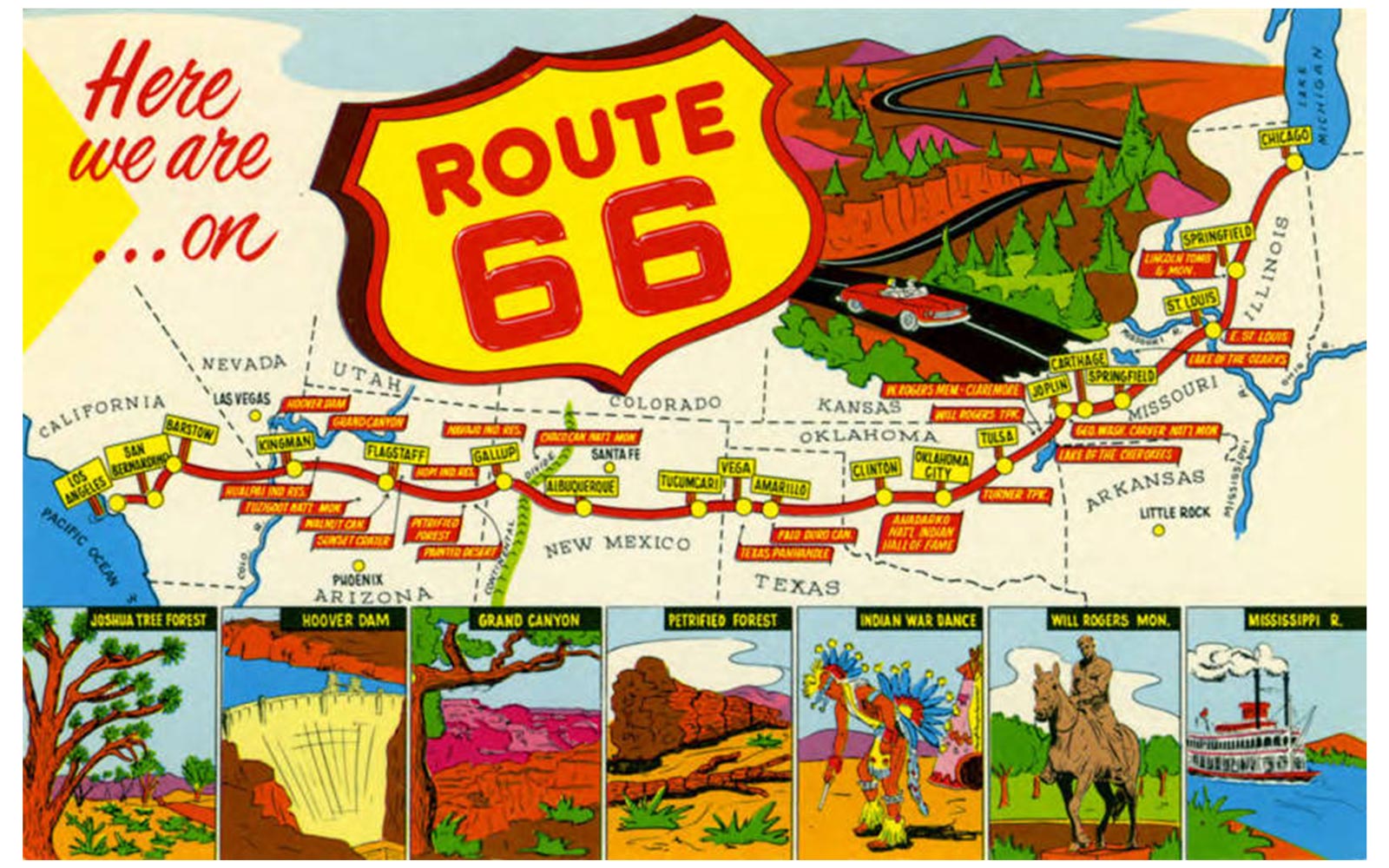
Route 66 hit the map in 1926, one of the first roads in America's brand-new numbered highway system. The groundwork had been laid five years earlier, when Congress passed the Federal-Aid Highway Act of 1921 to knit the country's patchwork of dirt tracks and local roads into a national network.
The man with the plan was Cyrus Avery, an Oklahoma oilman and entrepreneur. Avery knew that rural towns across the Midwest and Plains weren't linked to any major thoroughfare, making it hard for them to get goods to market and prosper. So the "Father of Route 66" lobbied hard for a Chicago-to-Los-Angeles route, cobbled together from preexisting state and local roads, that would dip southwest and connect these neglected communities to the coast.
On November 11, 1926, US Highway 66 was officially born. Avery and his colleagues began promoting the road with great fanfare, touting it as the "Main Street of America", a clever bit of branding that resonates a century later. In 1928 the new road hosted a coast-to-coast foot race, the famous "Bunion Derby," won by Andy Payne of tiny Foyil, Oklahoma, one of the small towns newly connected by the highway, in 573 hours run over 84 days.
Within a few years the road became a favorite with truck drivers: the flat prairie land it rolled through and its milder, more southerly climate made it an easier drive year-round than the northern transcontinental highways.
Side story
The name game
Route 66 nearly wasn't 66 at all. It was initially designated US 60, a multiple-of-10 number reserved for major east–west roads, until eastern states complained that "60" belonged to a highway starting in Virginia. The Chicago–LA route was renamed US 62, until Cyrus Avery argued for 66, saying the double number was catchier. He was right.
Its other names stuck too: the Main Street of America (Avery's marketing), the Mother Road (John Steinbeck's coinage), and the Will Rogers Highway, honoring the beloved Oklahoma humorist. Even its length kept changing: 2,448 miles (3,940 km) is the figure everyone quotes, though realignments straightened and shortened stretches of the road over the decades.
16:10 · approx 1600 × 1000 px
Chapter two · 1933–1945
Road to opportunity.
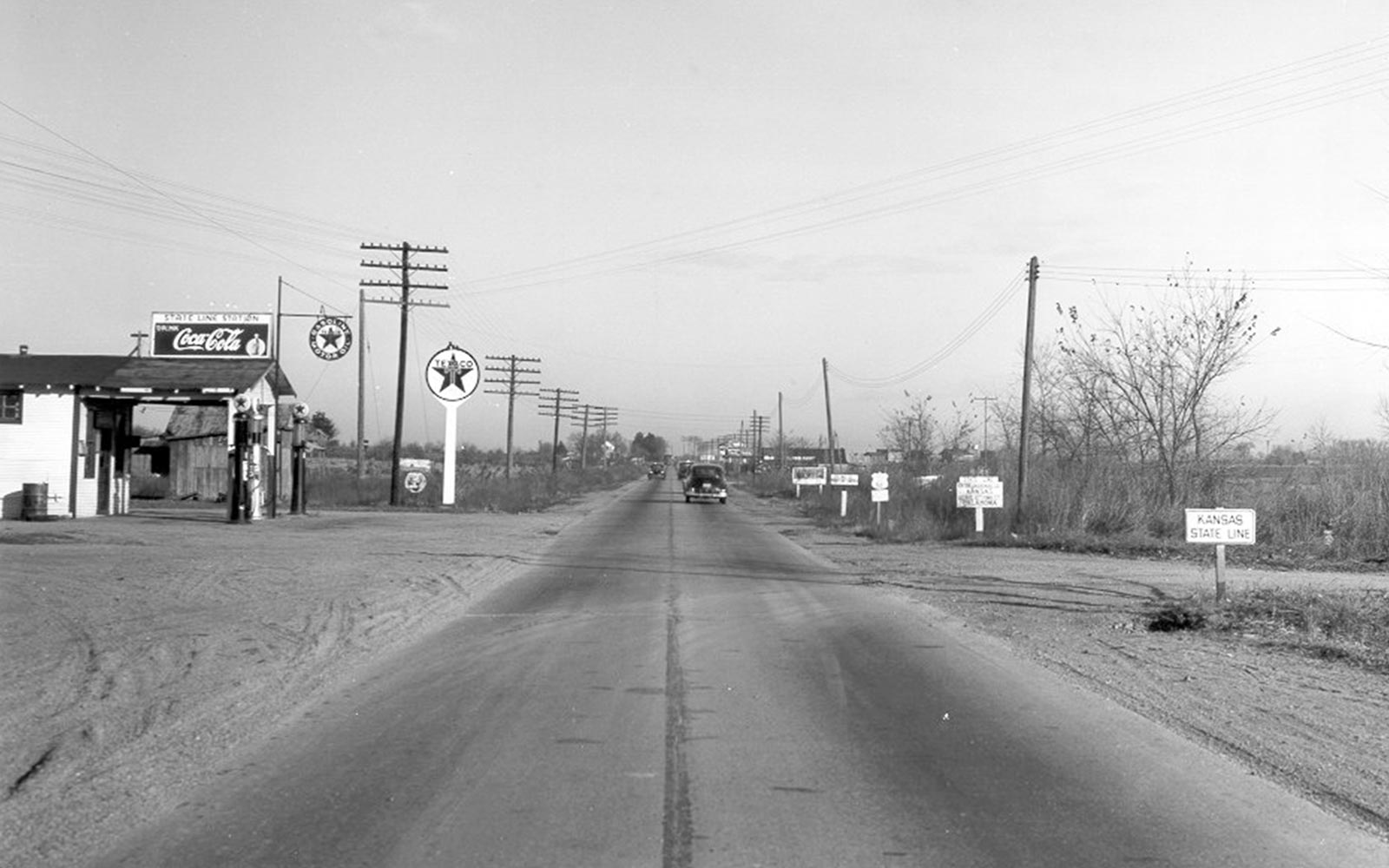
During the 1930s, dust storms born of extended drought drove families off their farms across the Plains states, especially in Texas and Oklahoma. Roughly a quarter of a million people packed what they could into cars and trucks and headed west to California to find work in the fields. Route 66 was the road they took.
Steinbeck's novel gave the highway its most indelible nickname, casting Route 66 as a refuge that protected migrants as they escaped the Dust Bowl. As the nation struggled through the Great Depression, the road featured in federal jobs programs: laborers were hired to pave the ever-busier highway, and in 1938, when the last section was laid in Oldham County, Texas, it became the first fully paved transcontinental highway in the United States.
16:10 · approx 1600 × 1000 px
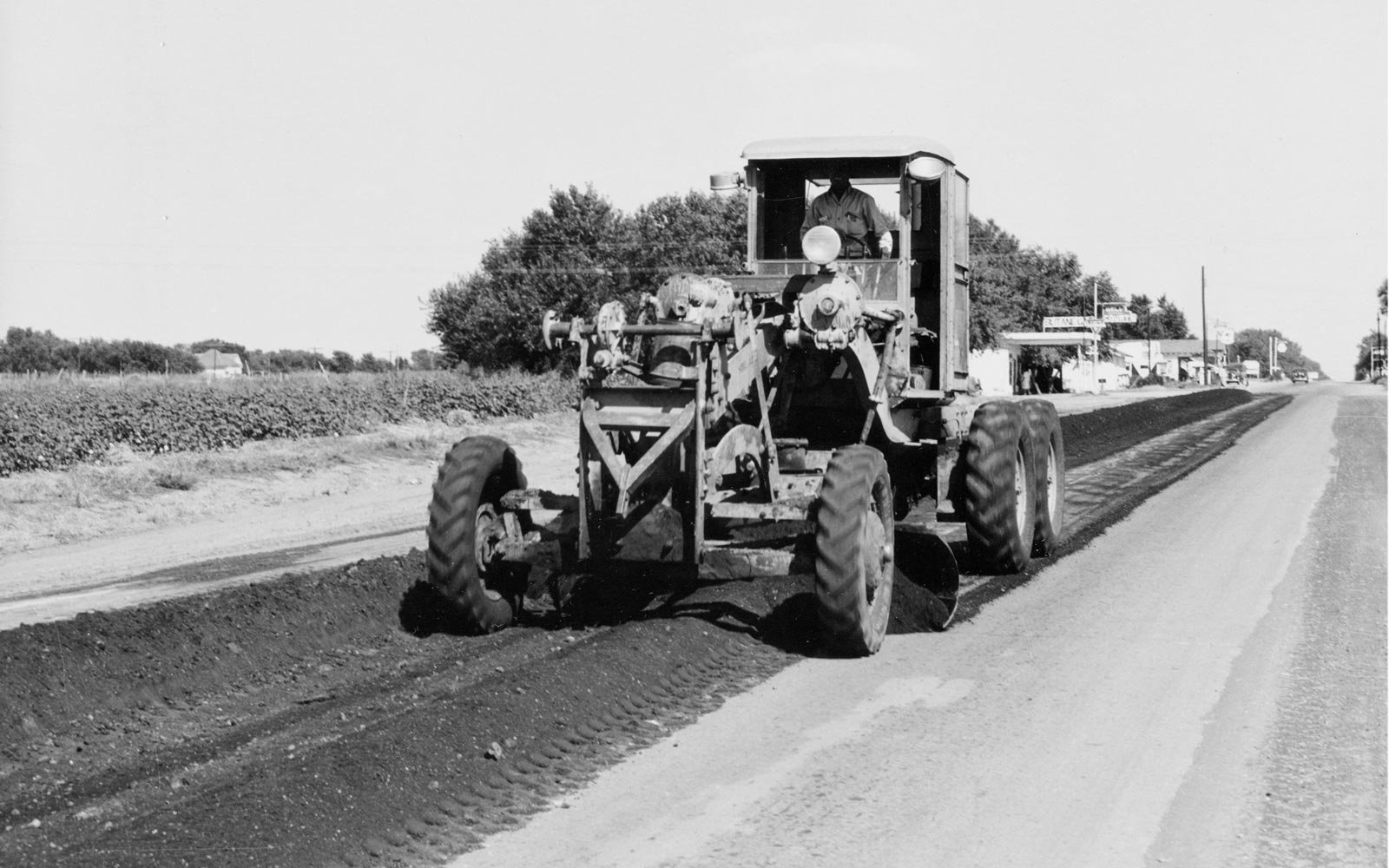
Three years later the country entered WWII, and Route 66 became a main path for moving soldiers and military supplies across the country. The mass migration to California's new factories continued, the Mother Road was, once again, the road to opportunity.
Chapter three · 1946–1964
The golden age.
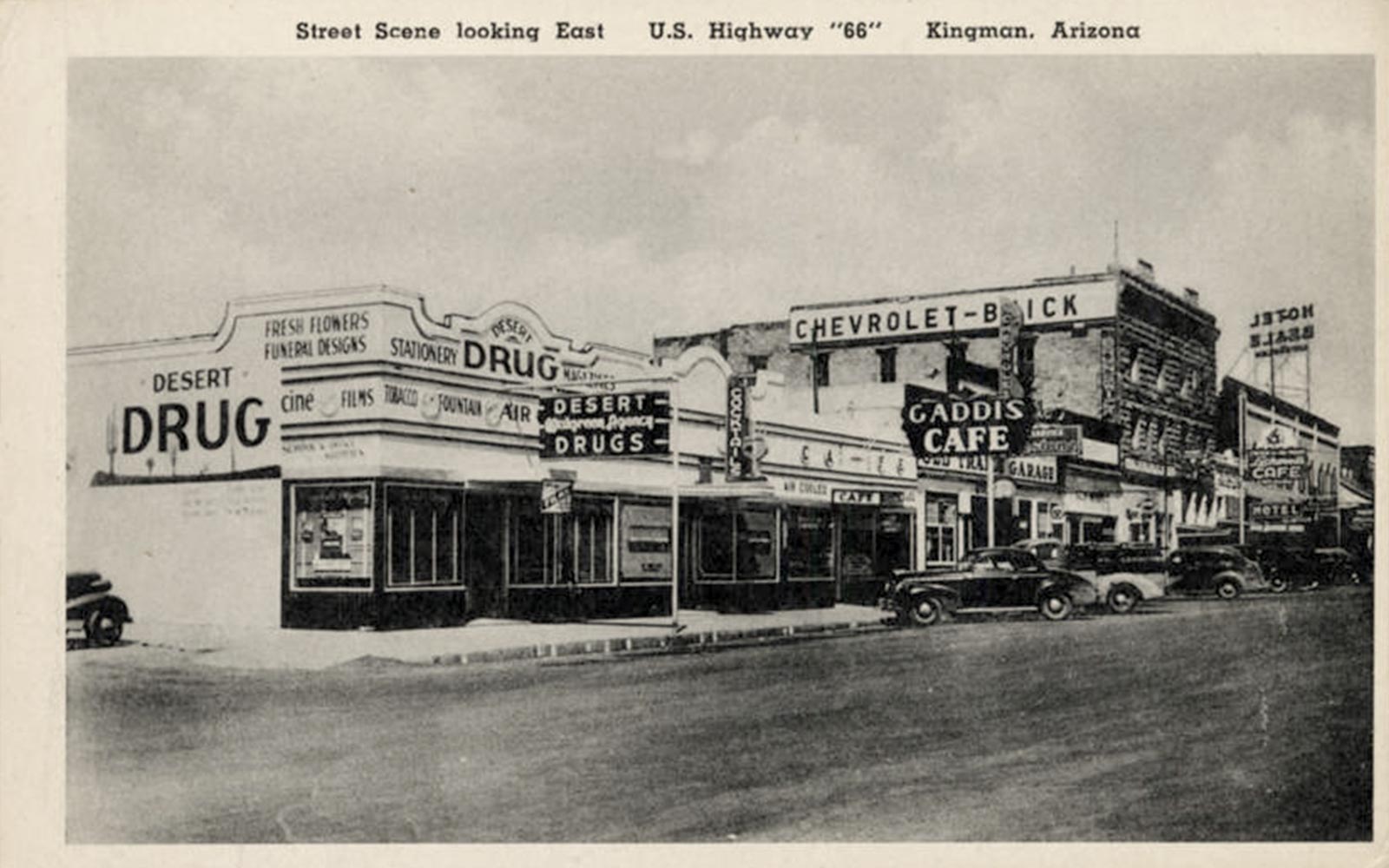
In the post-war economic boom, more Americans bought cars and worked jobs that gave them leisure time. Road trips boomed, and Route 66's allure kept growing. Bobby Troup wrote "(Get Your Kicks on) Route 66" and Nat King Cole sang it to the top of the charts in 1946. That same era gave the road landmarks that still define it: Red's Giant Hamburg in Springfield, Missouri, considered the world's first drive-through restaurant (1947), and the Cozy Dog Drive In in Springfield, Illinois, birthplace of the corn dog on a stick (1949).
Motels, gas stations and diners popped up to serve the new travelers. Drive-ins proliferated. Roadside attractions like the whopping Blue Whale of Catoosa competed for motorists' attention: the bigger and stranger the better. Businesses installed bright, glowing neon signs beckoning drivers to pull over, buy souvenirs, eat and sleep.
All of these features helped turn Route 66 into a cultural touchstone for American travel in the mid-20th century. From 1960 to 1964, the Route 66 TV series followed two men traversing the country in a Corvette convertible, bringing the road into American living rooms. In 1962, the first "Muffler Man", a lumberjack holding an axe, was erected at the Paul Bunyan Cafe in Flagstaff, Arizona.
16:10 · approx 1600 × 1000 px
The full picture
An honest reckoning
The freedom of the open road wasn't enjoyed equally by everyone. Black travelers weren't welcome in many towns along the highway and had to rely on the Green Book and other directories to guide them to safe places to eat and sleep. And the route passes near and through the lands of more than 25 tribal nations, whose cultures and heritage are woven through the Southwest, while some roadside attractions of Route 66's heyday perpetuated wildly inaccurate stereotypes about Native peoples. Today's road tells these stories more honestly.
Chapter four · 1956–1985
Decline & reinvention.
Route 66 took a pounding from WWII truck traffic, freight between Chicago and St. Louis quintupled compared to a decade earlier, and cars kept hitting the road in ever-greater numbers after the war. Despite upgrades to make it wider, smoother and straighter, the two-lane highway couldn't keep pace. In 1956, President Eisenhower signed the Federal-Aid Highway Act, creating the interstate system, and sounding the death knell of Route 66.
Five shiny new interstates (I-55, I-44, I-40, I-15 and I-10) incrementally bypassed the old road. Traffic decreased to a trickle, and many small towns along the original route were abandoned. Route 66 became a ghost road, flickering to life only in bits and pieces. In 1984, Williams, Arizona became the last town wiped off the map by the interstate, and in 1985, Route 66 was officially decommissioned, removed from maps entirely.
But fans of the old highway remained. Preservationists, famously including Seligman barber Angel Delgadillo, who helped spark the movement in 1987, founded state associations and the National Historic Route 66 Federation (1995). In 1999, Congress passed the Route 66 Corridor Preservation Program, funding the protection of the road's landmarks. "Historic Route 66" returned to maps, evocative and history-laden, a portal to a bygone, slower-paced era of travel, a symbol of American hope, adventure and resilience.