
Beyond the checklist
Every traveller knows the big names: Cadillac Ranch, Blue Whale of Catoosa, Gemini Giant, Midpoint Café, Wigwam Motels, Tucumcari neon, Seligman, Oatman, Santa Monica Pier. These stops appear in guidebooks, blogs, YouTube videos and souvenir shops. It is tempting to dismiss them as overdone, but that would be too easy. The famous places still matter because they give shape to a road that can otherwise feel overwhelming.
Cadillac Ranch
Cadillac Ranch near Amarillo is chaotic, windy, colourful and often crowded. It is not a quiet historical monument. It is folk art, roadside theatre and a participatory ritual. People arrive with spray paint, add their layer, take photos and leave. The cars keep changing, which means the stop is never exactly the same twice. That is why it works. It is less about preserving the past and more about proving that Route 66 is still being marked by the people who travel it.
The Blue Whale
The Blue Whale of Catoosa is pure joy. It has no business being as beloved as it is: a large smiling whale beside a pond in Oklahoma. But the Mother Road has always had room for the handmade, the odd and the affectionate. The whale reminds you that not every attraction needs to be grand. Some places survive because they make people happy.
Gemini Giant and the roadside giants
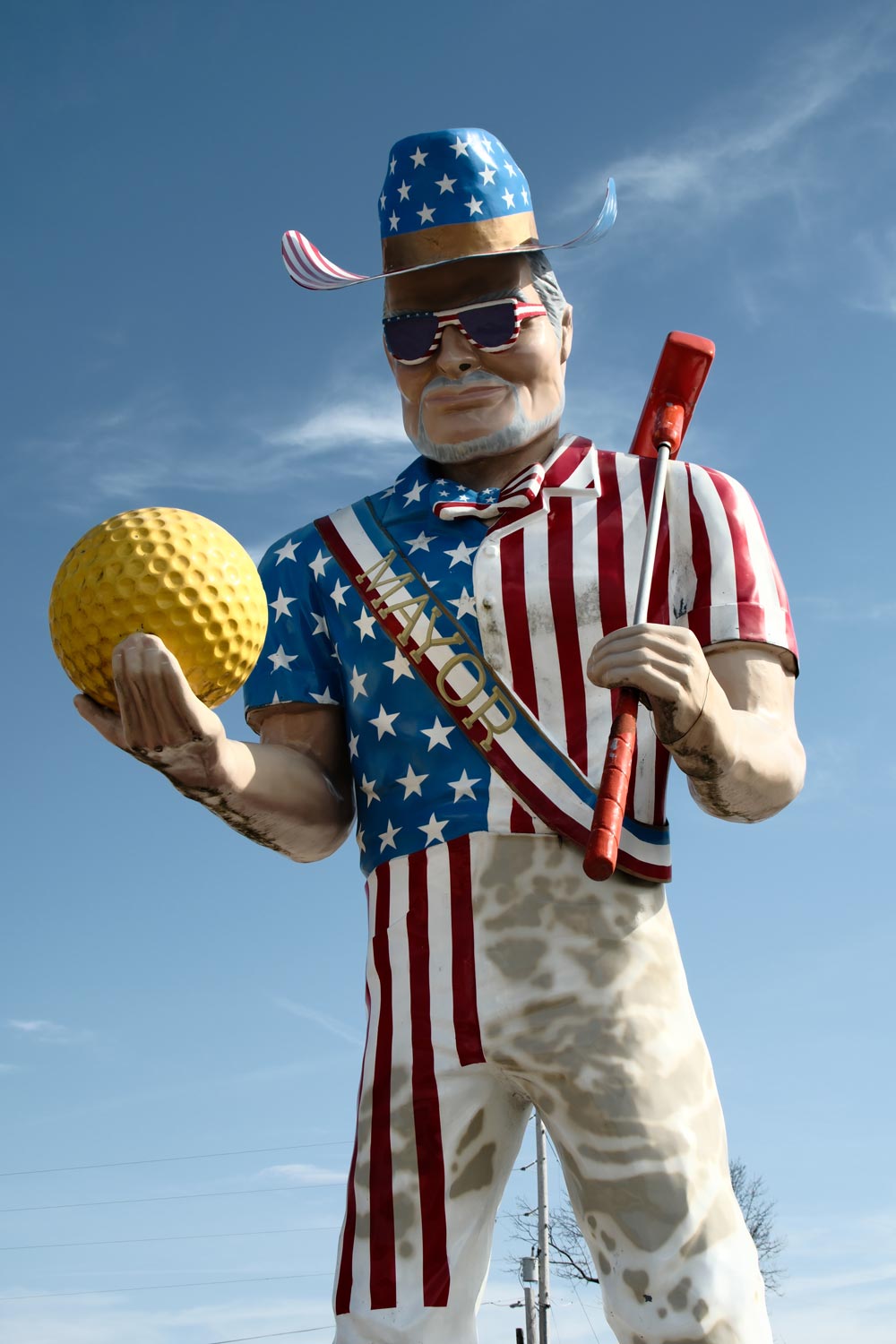
The Muffler Men and Uniroyal Gals of Route 66 belong to the era when businesses needed to be seen from a moving car. Big figures, bright signs and improbable mascots were part of the sales strategy. Today they are nostalgic, but they are also design objects: scale, silhouette, humour and roadside visibility all rolled into one. They tell you how commercial creativity worked before digital advertising flattened everything into screens.
The Midpoint
The Midpoint Café in Adrian, Texas, carries a symbolic weight because it marks the halfway point between Chicago and Los Angeles. Travellers love a marker. We need to know where we are in the story. Standing at the midpoint, even briefly, gives the trip a chapter break. You are no longer leaving the East; you are heading fully into the West.
Wigwam Motels
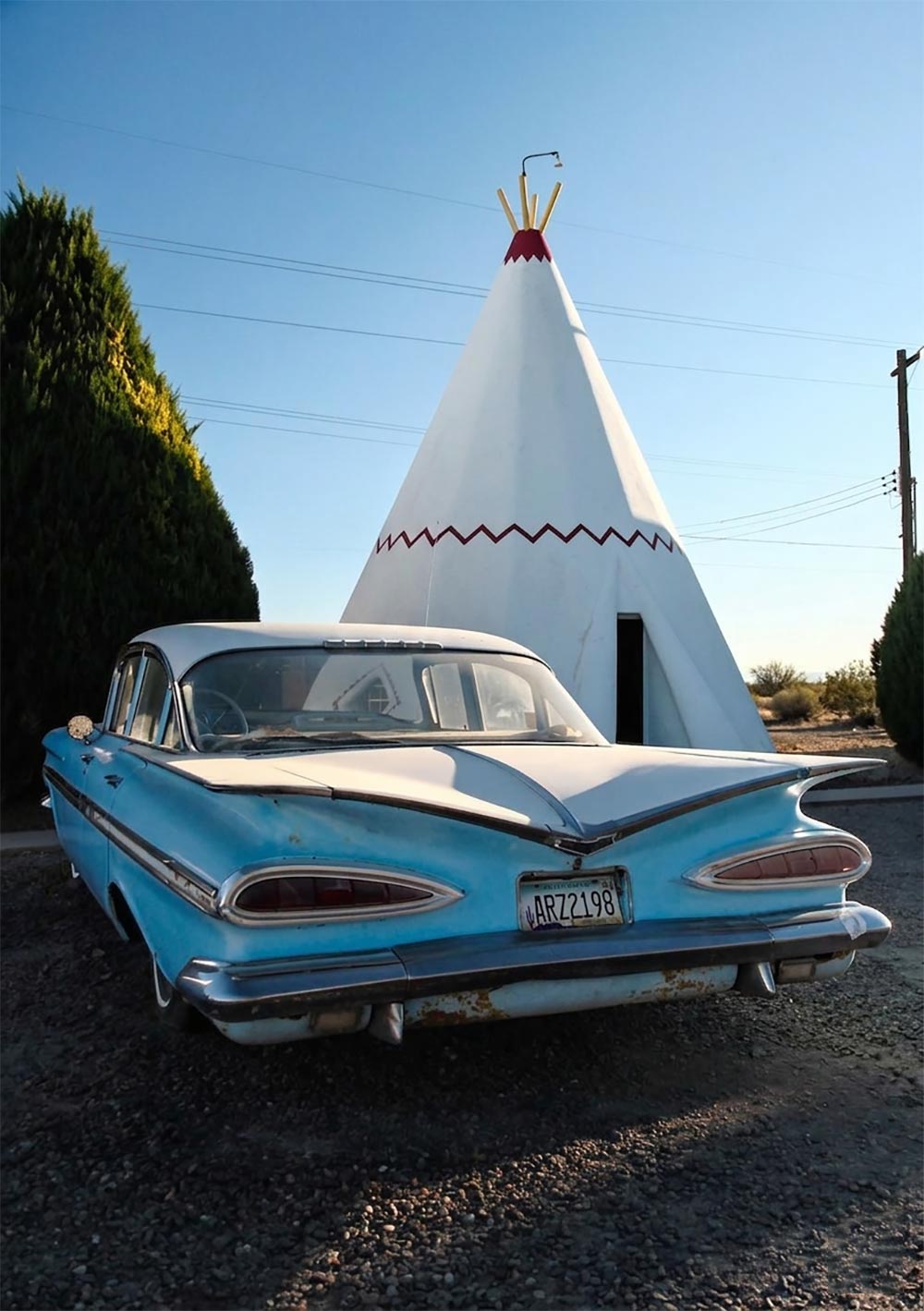
The Wigwam Motels are complicated and memorable. They are iconic, photogenic and part of Route 66’s motor-court history, but they also raise questions about cultural imagery, roadside fantasy and how mid-century tourism borrowed from Native American forms. A thoughtful traveller can enjoy the architecture and still understand that these places belong to a larger, more complex story.
Seligman and Oatman
Seligman is often called one of the towns that helped revive interest in historic Route 66. It has colour, humour, gift shops and character. Oatman is stranger: a former mining town, wild burros, wooden sidewalks, staged frontier energy and desert drama. Both towns show how Route 66 survives partly through performance. They know travellers are coming, and they have built an experience around that expectation.
How to visit the icons
Visit the famous stops, but do not let them be the only stops. Take the photograph, then look around. What business is next door? What road alignment brought you there? What town is trying to survive around the attraction? Route 66 icons are not isolated props. They are anchors in a much bigger landscape.
Why the famous stops became famous
The big Route 66 icons work because they compress a huge story into something visible. A giant statue tells you about roadside advertising. A restored gas station tells you about the age of independent service. A neon motel sign tells you about the night economy before online booking. A diner counter tells you about how travel once depended on people who knew the road personally.
The road's business culture grew rapidly during the Great Depression, World War II and the post-war boom. More traffic meant more service stations, cafes, motor courts, motels and repair shops. Many were small family operations. Their signs needed to catch drivers at speed, which is why the route became such a playground for oversized lettering, arrows, mascots, towers and novelty architecture.
Fun facts behind the icons
Cadillac Ranch near Amarillo was created in 1974 by the art group Ant Farm with patron Stanley Marsh 3. The Blue Whale of Catoosa was built in 1972 by Hugh Davis as an anniversary gift for his wife. It later became part of a popular family swimming attraction and eventually one of Route 66’s most recognisable pieces of roadside whimsy. Petrified Forest National Park is especially significant because it contains a visible trace of historic Route 66 inside a National Park Service unit.
Famous stops deserve attention, but they should not be treated like isolated trophies. They are entry points into wider themes: post-war optimism, family enterprise, advertising, migration, leisure, decline and preservation. When you photograph one, ask what kind of business, town or travel behaviour made it necessary.
Take it with you in Route 66 Logbook
Use Route 66 Logbook to look beyond the headline attractions. For every famous stop you save, add one nearby place you did not already know. The big icon gives you the shared Route 66 story; the smaller stop often gives you your own.
Why the icons connect travellers
The big stops are also useful social markers. When you meet other travellers, these places become shared reference points. You can compare whether Cadillac Ranch was muddy, whether the Blue Whale was quiet, whether the Midpoint felt emotional, whether Seligman felt charming or too crowded. Shared icons create conversation.
Visit popular stops at quieter times
Try visiting popular stops at odd times when possible. Early morning can turn a crowded photo stop into a private experience. Late afternoon can add better light and longer shadows. Even the most familiar roadside attraction can feel fresh when you meet it in the right conditions.
Expect character, not perfection
Do not be disappointed if an icon feels smaller, stranger or less polished than expected. Route 66 icons are rarely pristine monuments. They are roadside objects, often improvised, repaired, repainted and commercialised. Their imperfection is part of their truth.