The changing road
One reason Route 66 stays interesting is that it never stays the same. It begins in the urban grid of Chicago and ends at the edge of the Pacific, but between those points it crosses farmland, river towns, Ozark hills, plains, oil country, cattle country, high desert, Native lands, railroad towns, forests, canyons, mountains and the Mojave. The road is not one aesthetic. It is a sequence of American landscapes and local histories.
Illinois
Illinois is the gentle beginning. You get brick streets, restored gas stations, small-town museums, roadside giants, classic diners and a strong sense that communities have embraced the road as heritage. It is a good state for learning how to slow down. The stops come often, and the distances are manageable. For first-timers, Illinois teaches the rhythm: drive a little, stop a little, read a sign, take a photo, move on.
Missouri and Kansas
Missouri adds hills, caves, rivers, old motor courts and towns with layers of rail, road and tourism history. The road feels less tidy and more varied. Kansas has only a short slice of Route 66, but it punches above its weight. Because the mileage is small, travellers sometimes rush it. Do not. Short sections can carry a lot of character.
Oklahoma
Oklahoma is essential. It has more drivable Route 66 mileage than many travellers expect and a deep relationship with the road’s identity. It gives you museums, diners, tribal history, oil-boom towns, the Blue Whale, old bridges and long stretches that feel properly road-worn. Oklahoma is where many travellers realise Route 66 is not only a nostalgic brand. It is infrastructure, migration, commerce, displacement, resilience and memory.
Texas
Texas is big sky, wind, cattle, humour and visual drama. The Panhandle section is not the longest, but it has some of the most recognisable stops: Shamrock’s art deco service station, the midpoint in Adrian, Amarillo and Cadillac Ranch. The landscape opens up. The road feels less like a town-to-town heritage trail and more like a line across space.
New Mexico
New Mexico changes the light. The colours shift: adobe, turquoise, neon, desert, mountain, sky. The route has old and newer alignments, and the Santa Fe loop adds historical depth if you choose it. Tucumcari is one of the great neon towns. Albuquerque brings urban complexity. Gallup gives railroad and trading-post history. This is a state to slow down in.
Arizona
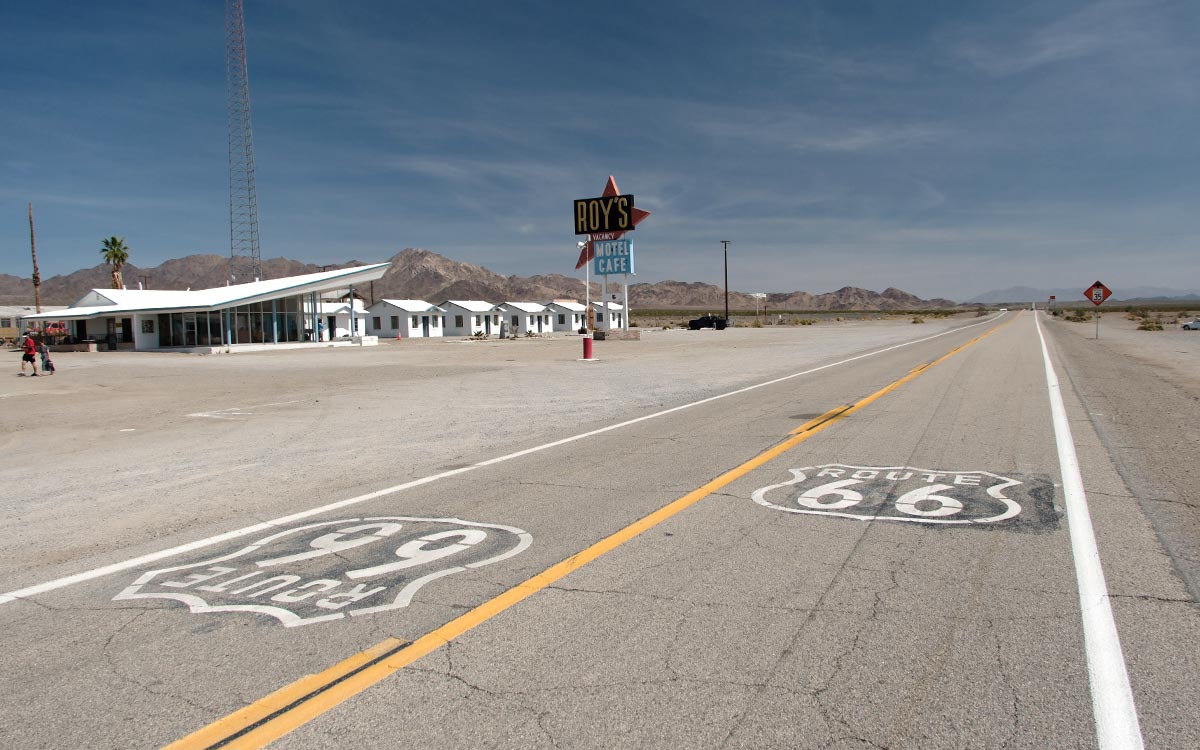
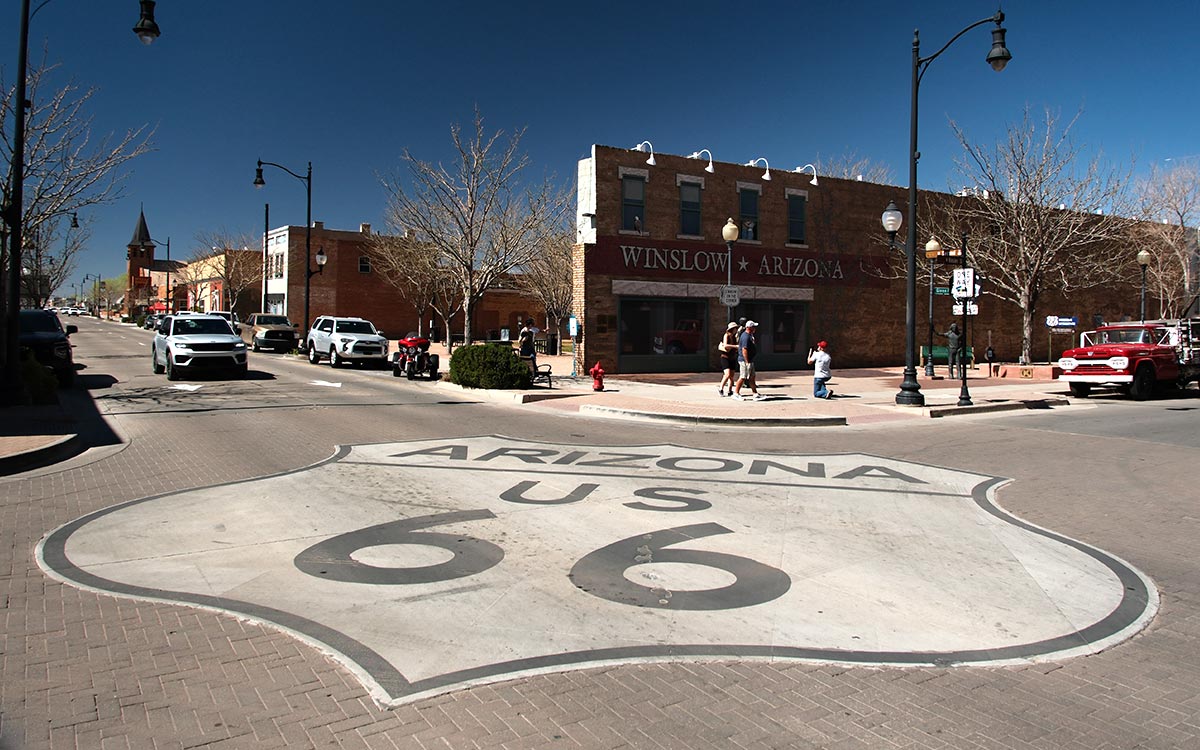
Arizona gives Route 66 some of its grandest landscapes. Petrified Forest, Painted Desert, high plateau towns, Flagstaff, Williams, Seligman, Kingman and the road toward Oatman all bring different energies. This is also where many travellers add the Grand Canyon, even though it is not directly on Route 66. Arizona feels like the road has entered myth: desert, railroads, canyons, vintage signs and long western horizons.
California
California is the final contradiction. You cross the Mojave, pass through towns that can feel remote and fragile, climb toward mountain and basin landscapes, then enter the vastness of greater Los Angeles. The romantic ending at Santa Monica is real, but so is the sprawl before it. The last chapter is not always pretty. It is honest. Route 66 ends in the modern world, not in a preserved museum.
The eight states are eight different moods
Route 66 runs through Illinois, Missouri, Kansas, Oklahoma, Texas, New Mexico, Arizona and California. That list looks simple, but the road changes personality every few hours. Illinois gives you brick streets, Lincoln country, small museums and early-road interpretation. Missouri adds Ozark curves, caves, stone buildings and Springfield's claim as the Birthplace of Route 66. Kansas only has a short stretch, but that shortness makes every stop feel concentrated.
Oklahoma has one of the richest Route 66 identities because Cyrus Avery, often called the Father of Route 66, was an Oklahoma highway commissioner and booster of the route. Texas gives you long sky, the midpoint idea and big visual gestures like Amarillo's art and ranching culture. New Mexico brings adobe, Pueblo and Hispano histories, neon corridors and the important pre-1937 Santa Fe alignment. Arizona gives desert towns, the Painted Desert, Seligman, Kingman and Oatman. California turns the road toward the Mojave, the San Bernardino corridor and the Pacific finish.
State-by-state fun fact
If you want one fact to carry in each state: Chicago is the traditional eastern start; Springfield, Missouri helped settle the name; Kansas has only about thirteen miles of Route 66; Oklahoma contains a large share of drivable historic road; Adrian, Texas promotes the midpoint; New Mexico has the Santa Fe loop story; Petrified Forest preserves an old road trace; and Santa Monica became the symbolic western ending even as alignments and official termini changed over the highway's life.
Take it with you in Route 66 Logbook
Use Route 66 Logbook to follow the road across all eight states and keep a record of how each one felt. Give every state a one-sentence mood when you leave it. By California, you will have a far better description of your own Route 66 than any generic itinerary can provide.
Notice what changes at state lines
State borders are useful reset points. Each time you cross one, ask what changed: the road surface, the signs, the architecture, the food, the accents, the climate, the colour of the light. Route 66 is often described as one road, but it is more accurate to think of it as eight conversations joined by asphalt.
Short does not mean minor
Do not let the shorter states fool you. Kansas, for example, is brief, but brief does not mean minor. A compact section can be easier to understand deeply because the stops sit close together and the local pride is concentrated.
Expect a complicated final chapter
By the time you reach California, you may feel both triumphant and tired. That is normal. The final state asks you to reconcile the mythic open road with modern sprawl, desert emptiness and metropolitan complexity. The ending is not simple, which makes it more interesting.